





City Know-how

A resource 
from Cities & Health journal and partners

Unlocking
Urban Research
for Practice

We support city-makers and the communities they serve

in implementing sustainable development goals with evidence.

Our journal Cities & Health builds a close relationship with cities, driving the progress of urban health. We enable researchers to test new knowledge for real-world impact and equip practitioners with the latest findings to improve health and climate outcomes.

Through this platform, access a curated repository of posts derived from our peer-reviewed articles, featuring City Know-how posts; one-page summaries that translate scientific findings into practical tools for urban decision-makers.

Join our mission of building urban development skills for Research, Planning, Design, and Policy as instrumental steps toward creating healthier and sustainable communities.

Review concepts for goal alignment

Seek information on how to improve outcomes

Find references on spatial and climate solutions

Be informed about evidence-based policies

Explore Our Content with Ease!

Click on the bot icon to navigate our articles, discover resources, and get instant assistance. 


Do you prefer a visual approach?

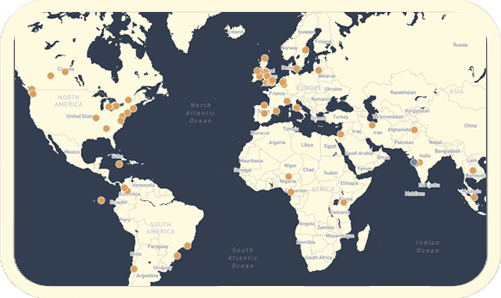
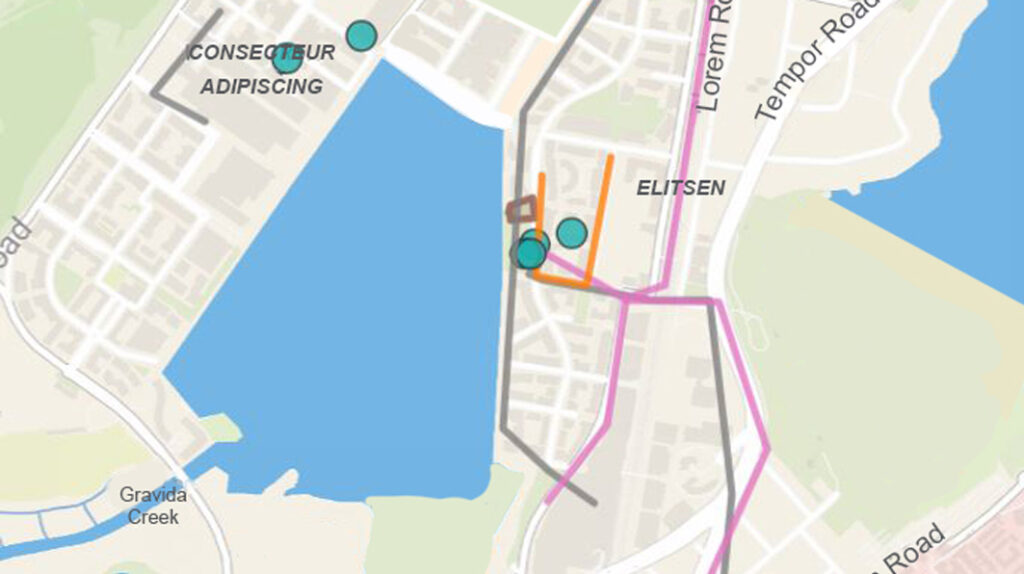
Check out our interactive map with clickable bubbles to open articles directly!

About our Know-how articles...

Discover scientific insights across diverse topics, focusing on improving human health by enhancing urban ecosystems.

We explore more than 14 topics and subtopic areas organized into four distinct contribution types: City Know-hows to make research accessible, Case Studies to support planning, Visual Essays to illustrate design approaches, and City Shorts to showcase how policies are applied and put into action.

Built environment refers to the human-made surroundings that provide the setting for human activity, ranging in scale from buildings and parks or green space to neighborhoods and cities that can often include their supporting infrastructure, such as water supply or energy networks.

Subtopics: 

  • Urban Planning 
  • Urban Design
  • Housing

Environmental sustainability is the ability to maintain an ecological balance in our planet’s natural environment and conserve natural resources to support the wellbeing of current and future generations.

Subtopics: 

  • Environment and health 
  • Environment and city
  • Climate

The Health and Social Care sector consists of any organisation which provides healthcare support to people, for example hospitals, dentists, and specialist support like physiotherapy, and social care support, for example, nursing homes, foster caring, and nurseries.

Subtopics:

  • Health and society
  • Public health policy and practice

Geography is the study of places and the relationships between people and their environments. Geographers explore both the physical properties of Earth’s surface and the human societies spread across it.

Subtopics: 

  • Physical geography: nature and the effects it has on people and/or the environment.
  • Human geography: concerned with people.
  • Environmental geography: how people can harm or protect the environment.

Urban studies is based on the study of the urban development of cities. This includes studying the history of city development from an architectural point of view, to the impact of urban design on community development efforts.

Built environment refers to the human-made surroundings that provide the setting for human activity, ranging in scale from buildings and parks or green space to neighborhoods and cities that can often include their supporting infrastructure, such as water supply or energy networks.

Subtopics: 

  • Urban Planning 
  • Urban Design

The Health and Social Care sector consists of any organisation which provides healthcare support to people, for example hospitals, dentists, and specialist support like physiotherapy, and social care support, for example, nursing homes, foster caring, and nurseries.

Subtopics: 

  • Health and society
  • Public health policy and practice


Environmental sustainability is the ability to maintain an ecological balance in our planet’s natural environment and conserve natural resources to support the wellbeing of current and future generations.

Subtopics: 

  • Environment and health 
  • Environment and city

Geography is the study of places and the relationships between people and their environments. Geographers explore both the physical properties of Earth’s surface and the human societies spread across it.

Subtopics: 

  • Physical geography: nature and the effects it has on people and/or the environment.
  • Human geography: concerned with people.
  • Environmental geography: how people can harm or protect the environment.

Urban studies is based on the study of the urban development of cities. This includes studying the history of city development from an architectural point of view, to the impact of urban design on community development efforts.

Explore our City Know-how map

Next step: share your Know-how

Ready to impact urban development with your know how?
From May 2024, our platform will feature two unique article formats for you to contribute your experience.

  • ‘City Know-how’ translates peer-reviewed research into practical knowledge for city makers through one-page summaries.
  • ‘City Insights’ encompasses an extensive range of content, including Reflective Praxis, Case Studies, City Shorts, and more, providing in-depth analysis for sustainable urban development.

Get prepared! 

Take a look at our contribution types here!

Let the world know about your City Know-how.

Featured posts

Discover the most recent articles.

The urban health crisis: How city living is quietly fueling the world diabetes crisis

We present a novel conceptual framework called the Urban Stress Model, which intentionally crosses disciplinary boundaries. We suggest that the unique physical form of cities contributes to an increased stress burden through the interacting influences of daily urban hazards and social disadvantage. We use New York City as a case example because of its high diabetes rates and its legacy of unequal healthcare in the context of concentrated wealth. Therefore, New York City can provide valuable insights for newly developing urban centers worldwide confronting similar challenges and growing social and health inequality.

Read More »

A pragmatic all-inclusive method to uncover drivers of health in high-density apartment buildings

This research from Sydney shows the value of combining qualitative flexibility with systems thinking. Key contributions include: 1) Demonstrating how conversational, non-rigid methods reveal overlooked drivers of health and well-being. 2) Showing that human–environment systems perspectives add depth to urban health research. 3) Providing a never-before-used resident-centred approach for studying complex city living challenges.

Read More »

What determines better neighbouring among affordable housing residents in Metro Vancouver, Canada

At the intersection of urban and public health policy, the success of higher-density affordable housing solutions to serve an inclusive well-being agenda depends upon reducing the association of these lifestyles and built environments with loneliness and social isolation. We construct a pro-neighbouring index and test its predictors using an ordinal logistic regression model based on resident survey data.

Read More »