City Know-hows
I use the travelogue methodology to investigate urban health and sustainable development in relation to the Mekong River in northeastern Thailand, revealing new insights and bringing travel to urban areas near the river into knowledge production.
Share
Target audience
Academics, government and non-governmental organizations, policymakers, and urban planners involved in land-use planning and environmental planning.
The problem
Rivers are important in urban planning and development. Many cities around the world are adjacent or near bodies of water. Properties associated with a river view command higher prices, representing preferences about desirability. Yet the literature on rivers and urban health emphasises environmental science, especially microbiology and toxicology, and overlooks the human side. There is a need for more qualitative and social science research on urban health and sustainable development in relation to rivers.
What we did and why
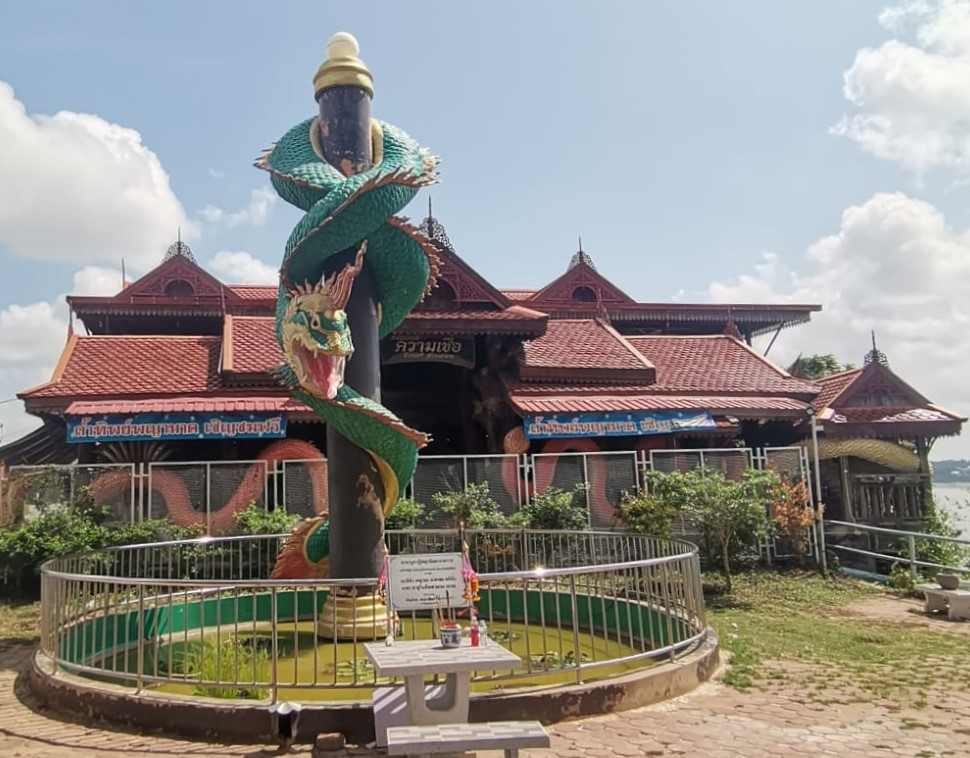
I asked ‘in what ways might urban health and sustainable development be interconnected with the Mekong River?’. To answer this question, I travelled to and within urban areas along and nearby the Mekong River in northeast Thailand, mostly by motorcycle, and engaged in observations, experiences, reflections, and conversations with adult urban residents in an application of the travelogue methodology.
Our study’s contribution
My experiences and conclusions based on travelling to and within river cities and towns reveal that there are diverse and complex interconnections between rivers and urban health and sustainable development. Amidst this complexity, this travelogue identifies and prioritises certain areas most relevant to the urban areas I studied. I saw first-hand how the Mekong River has been substantially changed by human activities, bringing the future of urban health and sustainability into question.
Impacts for city policy and practice
Building healthy and sustainable cities in Thailand, a country characterised by rapid urbanization and moderate population growth, is an urgent priority. By addressing the areas for improvement identified in the study, city policy and practice can promote healthy, sustainable, and resilient urban environments along the Mekong River and beyond. The article also shows that the travelogue methodology can deepen understanding of these complex relationships through innovation and multisensory experience.
Further information
Read more about using a travelogue for urban health research: Travel and the travelogue as innovative research methodology: knowledge creation for advancing urban health and health equity in the 21st century
Full research article:
Related posts

Access to greenspace impacts children’s physical, social, and mental health. While the factors affecting children are different from those affecting the general population, many accessibility measures use the same principles for children as they use for the general population. We present a comprehensive visual overview of factors affecting children’s access, how it can be measured across geographical contexts, and what measures remain to be developed.

Urban greening interventions have been shown to increase the climate resilience of our cities and improve the health outcomes of residents. How can we use open data to target these interventions more effectively and maximise the benefits of increased greening?

This study on Greater Cairo Region, Egypt, addresses urban challenges through “urban micro-lungs.” It explores designing green corridors responsive to local climate and space constraints, emphasizing resilient, public health-focused interventions for hyper-dense cities in the Global South.