How Verhalenhuis Belvédère keeps Katendrecht connected: Participation, recognition, solidarity

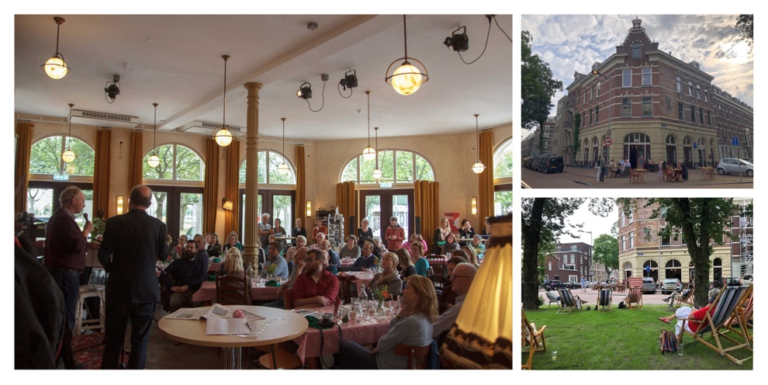
Verhalenhuis Belvédère demonstrates how community-led, culturally rooted public spaces bolster neighbourhood resilience during urban renewal by combining participatory co-creation, flexible programming, recognition, and memory work. More broadly, examples like this show how a socio-spatial triad—spatial agency, networked solidarity, and identity grounding—can help protect neighbourhood identity and strengthen lasting social infrastructure in diverse communities.

Read More »

How does the built environment and traffic impact air pollution, and what does this mean for public health? 

Air pollution threatens public health globally. Our exposure to air pollution is influenced by transport. Transport is both a prominent source of air pollution and an important determinant in our exposure to it. The built and natural environment also dictate how, when and where we travel, and what we are exposed to. We provide a comprehensive review of these relationships and their interactions.

Read More »

Natural experiments in urban air quality in Rwanda

To understand the current drivers of air pollution, we used two natural experiments (Car-Free Day and COVID-19 Lockdown) to examine their impact on air pollution using particulate matter air pollution data in Kigali City. The health impact of non-motorized transport events in Kigali, known as ‘Car-Free Days,’ goes beyond just mass physical exercise. Importantly, it has reduced air pollution by 15%, this is expected to save more than 200 disability-adjusted life years annually.

Read More »